NASA's New Flying Robots: Bee-ing in Space for the First Time
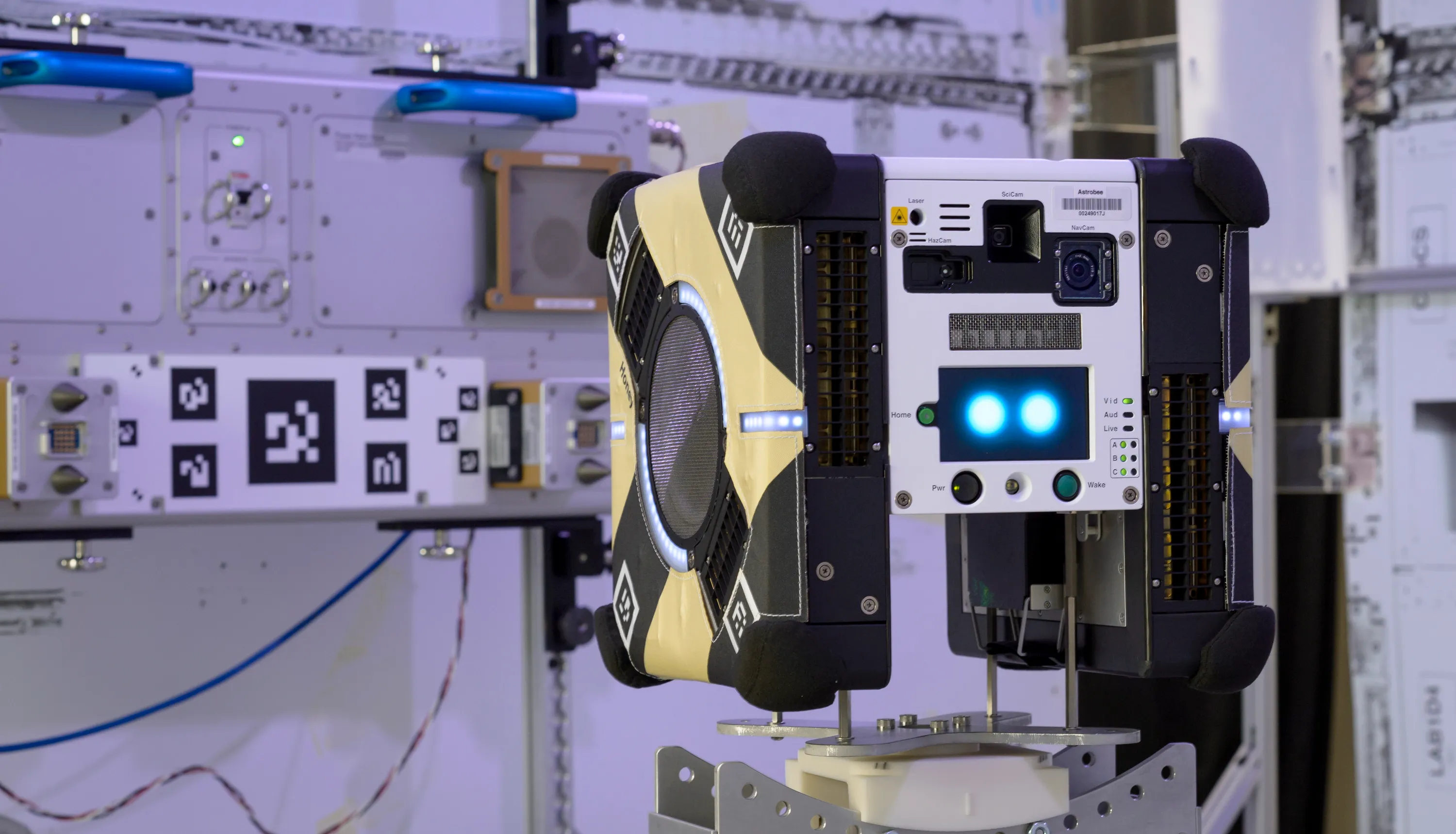
This NASA feature introduces "Astrobees" – a trio of free-flying robotic cubes named Honey, Queen, and Bumble that now buzz around the International Space Station. While not pollinators, they are inspired by bees in name and function, working autonomously to assist astronauts with routine tasks.
Notably, NASA frames these robots as precursors to space helpers for Moon and Mars exploration: "the robots will do their work flying alongside astronauts…and will play a critical role in supporting…exploration of the Moon, Mars and beyond."
This suggests a future where swarms of small robotic "bees" help maintain spacecraft or space habitats, tending experiments or crops so that human crews can focus on more complex duties. Astrobee's early success on the ISS is a proof-of-concept for deploying robotic bees in extraterrestrial environments, paving the way for more specialized variants (like pollinating bots) in lunar/Martian bases.
Astrobee Capabilities
- Autonomous navigation throughout the space station
- Ability to perform routine monitoring tasks
- Camera systems for documentation and inspection
- Modular design allowing for different tool attachments
- Propulsion system designed for zero-gravity environments
Implications for Mars Missions
The Astrobees demonstrate how small, autonomous robots can effectively operate in space environments. This technology could evolve into specialized robots for Mars missions, including agricultural assistants that could help maintain food production systems in Mars habitats.
While current Astrobees aren't designed for pollination, their navigation systems and autonomous capabilities provide a foundation for future robotic pollinators that could operate in enclosed Mars greenhouses. The lessons learned from Astrobee operations on the ISS will directly inform the development of more specialized robots for future space colonies.